
Daylight is generous to an empty house. Midday sun flattens every room, hides weak ceiling fixtures, and makes dark surfaces look crisp instead of dim. Once the sun drops behind the roofline around six, the same rooms run on artificial light, closed windows, and indoor airflow — and small layout oversights show up right away.
You do not need to stay overnight to catch most of them. If you have already walked the exterior route in our five-check night test or seen how the street changes in the neighbourhood evening-shift guide, this indoor checklist focuses on what happens inside the walls once the curtains close and the lights go on. Walk through with a notepad and test each point yourself rather than taking a quick glance across an open room.
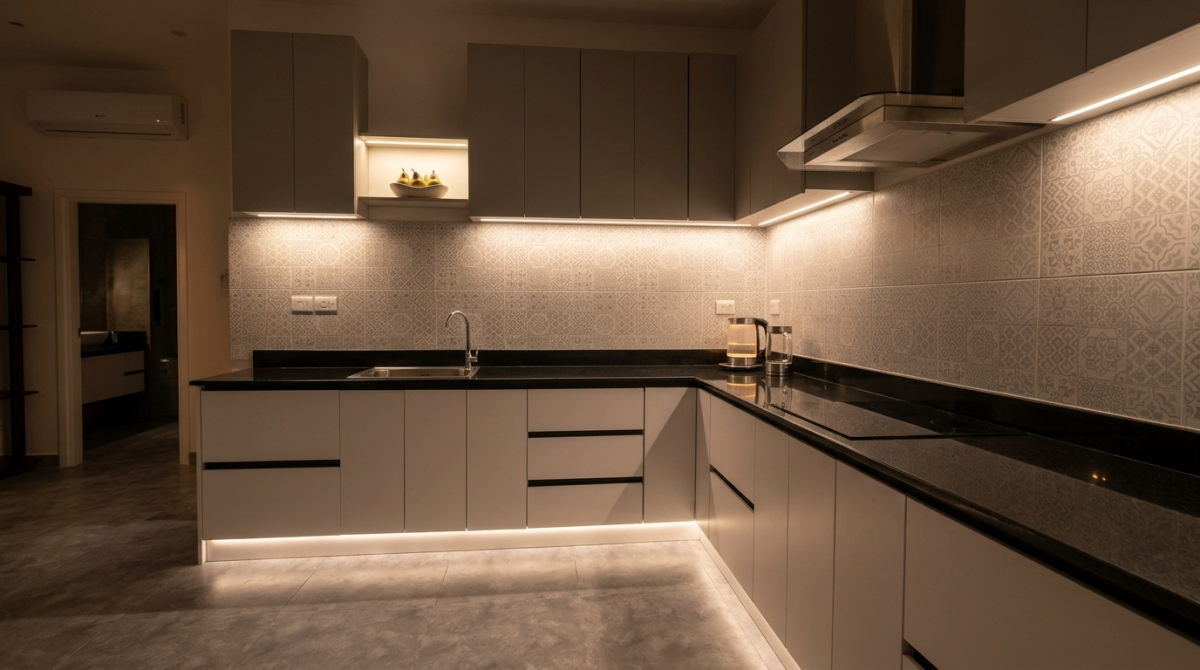
Ceiling downlights alone often put your own shadow on the sink and worktop once daylight fades.
1. Check Kitchen Worktops for Task Shadow and Outlet Placement
Kitchens often look brightest at noon and darkest at seven in the evening. Most recessed ceiling downlights sit down the middle of the room, which puts your own head and shoulders directly between the bulb and the sink or chopping board. Stand where someone actually stands to rinse vegetables or read a recipe, and see whether your body throws a dark shadow onto the counter.
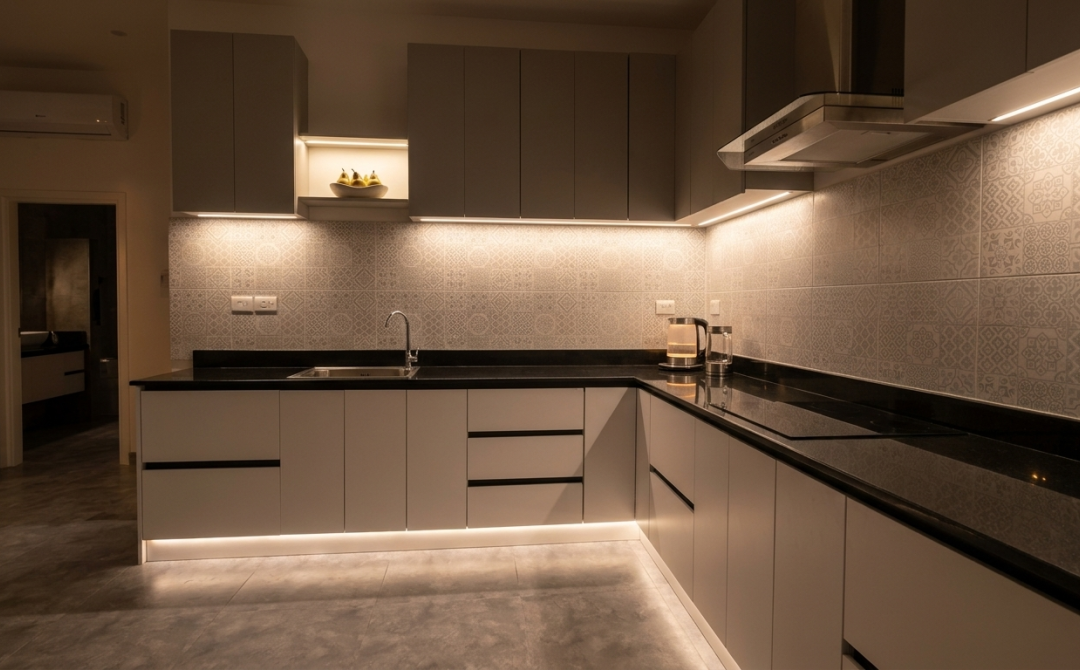
Dark granite and matte charcoal cabinets absorb more light than pale surfaces, so task lighting under the upper cabinets makes a noticeable difference after sunset. Check whether under-cabinet lights exist, whether they run on their own switch, and whether wall outlets along the backsplash sit clear of the sink tap and wet prep zone. While you are there, switch on the range hood light and fan: does the hood light illuminate the cooktop cleanly, or leave the front controls in shadow?
2. Trace Switch Grouping and Two-Way Controls Between Rooms
Checking the front-door switch takes three seconds, as described in the entry switch test, yet evening comfort depends just as much on the switches between rooms. Walk from the dining area toward the hallway, from the living room to the terrace doors, and from the bedroom doorway toward the bed. At each transition, ask whether you can turn on the next room before turning off the one behind you.
Two-way switches — one at the bedroom door and a matching switch beside the bed, or one at each end of a long corridor — keep you from crossing an unlit room around furniture at night. Also look at switch banks with four or five rockers side by side. If outdoor porch lights, ceiling fans, and interior downlights share an unmarked row, notice whether the switches are arranged in the order you reach them or mixed at random.
3. Check Curtain Clearances, Wall Reflections, and Glare
Glass looks open in the afternoon, then turns into a dark mirror once indoor lights come on. Before deciding on a living room or bedroom, look closely above every window and sliding door. Is there enough clear wall space above the frame for a curtain track or pelmet without hitting a split air-conditioner unit, a cornice edge, or a sliding-door handle?
Look at where interior ceiling lights sit relative to the TV wall and large windows. Downlights placed right in front of a glossy screen or a glass terrace door bounce bright white dots back into your eyes all evening. If you plan to keep sheer curtains drawn after dusk for privacy — something our Night One walkthrough covers from the street side — check that the track extends past the glass width so fabric does not block half the opening during the day.
4. Inspect Bedroom Outlets and Nighttime Indicator Lights
Bedrooms are rarely tested with the door closed and the main ceiling lights switched off. Stand in the bedroom, picture the bed width against the main wall, and check where the bedside power outlets land. Outlets tucked too close to the centre get hidden behind the headboard; outlets placed too far out leave lamp and phone cords stretched across the walkway.
Look up at the split air-conditioner unit and any wall sockets with tiny pilot LEDs. Bright blue or green display panels on high wall units can light up an entire darkened ceiling when you are trying to sleep. Ask whether the unit display can be dimmed or turned off from the remote, and check whether a bedside table lamp can sit comfortably without blocking a wardrobe door.
5. Test Bathroom Lighting, Mirrors, and Night Fan Noise
A trip to the bathroom at two in the morning feels very different from a daytime inspection. Check where the vanity light sits relative to the mirror: a single downlight behind your head casts shadows across your face, whereas a fixture close to the mirror wall lights the basin evenly without needing to turn on every bright ceiling lamp in the room.
Check the switches outside or inside the bathroom door too. When the exhaust fan is wired to the same switch as the main light, every midnight visit starts a noisy motor that echoes into the adjoining bedroom. Separate switches for a soft mirror light and the ceiling fan keep night use quiet. At the same time, look down at the shower curb or floor transition and check that the edge is clear and easy to read in low light.
6. Run the Air Conditioning at Night Speed and Listen Indoors
Midday viewings usually start with the air conditioning blasting on high fan speed to cool an empty house quickly. For an evening check, close the doors and set the living-room and bedroom units to their lowest quiet setting for five minutes. Listen from the sofa and from the pillow position rather than standing under the unit.
Notice two things: where the air stream goes and what vibrates. In some bedrooms, a wall unit aimed straight across the bed pushes cold air directly onto your face or rattles the edges of lightweight curtains. Step into the adjacent room and listen for exterior compressor hum or pipe vibration through the wall — sounds that daytime traffic hides, as noted in the quiet-hour test, become obvious once the street settles down.
7. Check Terrace Screen Doors and Porch Switch Placement
After sunset in Thailand, warm indoor lights draw insects toward any gap around terrace doors. Slide every exterior mesh screen shut from end to end and run a hand gently along the latch edge and bottom track. A screen that bows slightly or leaves a finger-wide gap near the handle defeats its purpose as soon as the living room lamps go on.
Equally important is where the exterior terrace or garden switch sits. If you have to unlock and step through the screen door just to switch off a bright veranda light before bed, you let outside bugs in at the end of every night. Having the outdoor light switches mounted cleanly on the indoor side of the doorway lets you settle the house without opening a screen.
8. Reading the House With the Lights On
None of these seven checks demand specialist gear, and none of them judge a house on finish alone. They simply reveal whether a single-storey layout was wired and lit for the hours when people actually relax, cook dinner, read, and move quietly between rooms. If you want to schedule a late-afternoon appointment using our dusk-viewing guide, take these seven points along on one page.
To see how single-level homes and shared evening spaces are laid out in practice, browse the single-storey bungalows at Leo Resort and the clubhouse options, or use the Leo Resort contact page to request current floor details and arrange a late-afternoon visit.
