by SompitMekmok | Aug 24, 2026 | อสังหาริมทรัพย์และที่อยู่อาศัย (Real Estate & Home Decor)
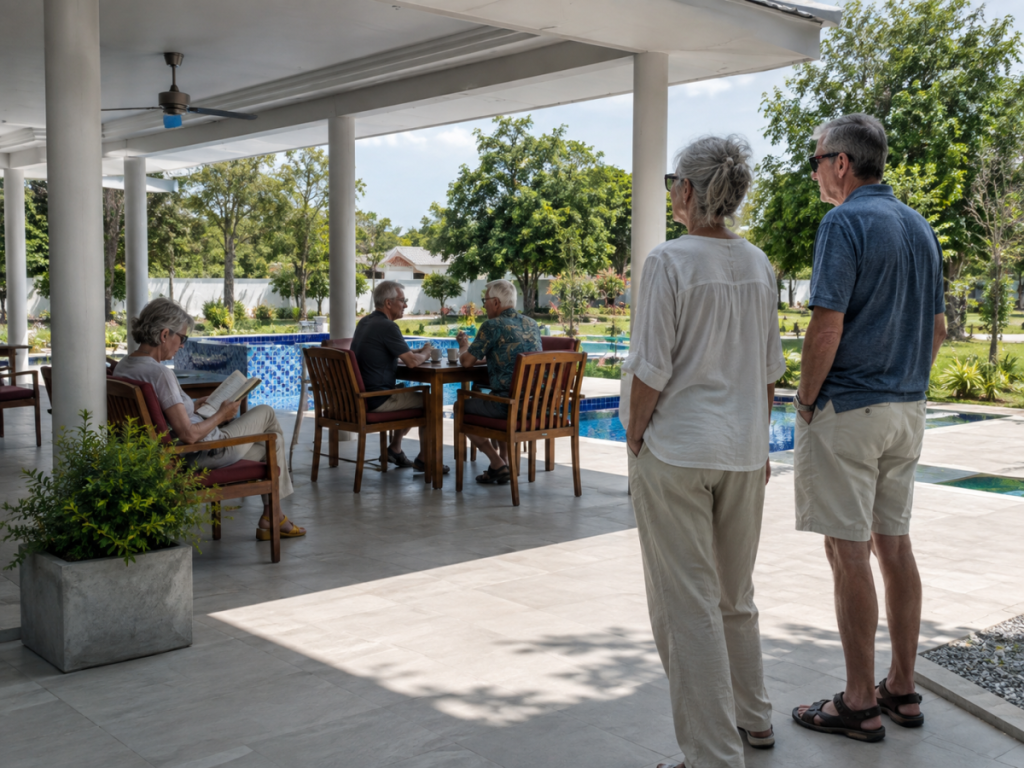
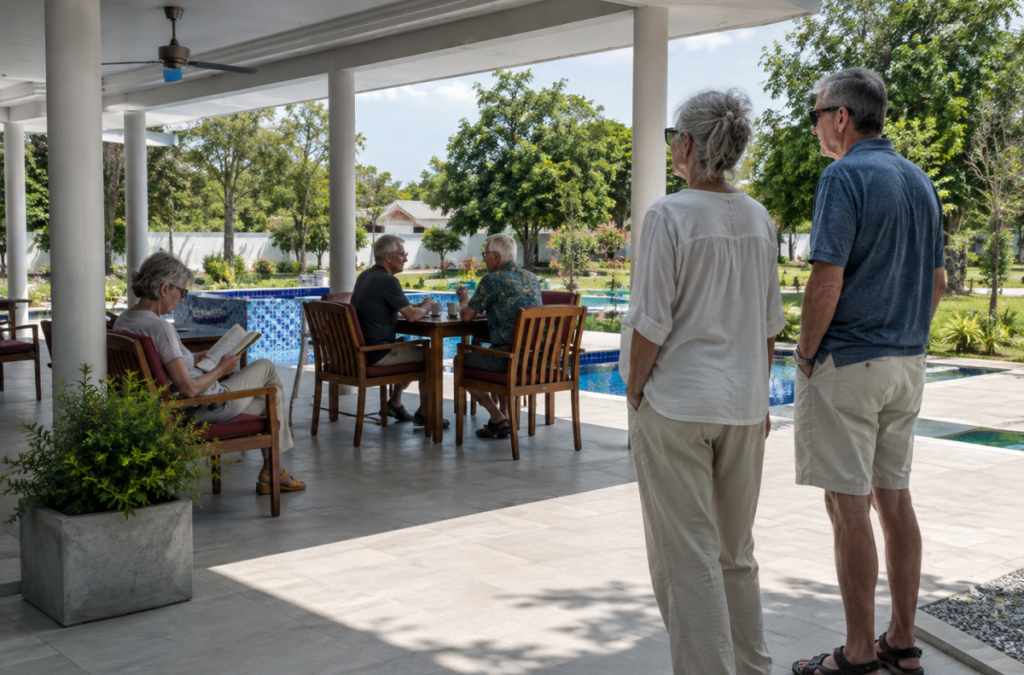
Evaluate a clubhouse when nothing special is happening: ordinary use tells you more about how it may fit your week.
A clubhouse can look attractive during a property tour and still tell you very little about daily retirement life. A pool, terrace, fitness area, garden, or games space may all be useful, but only if you would genuinely use them. The useful question is whether the shared space would actually fit the way you expect to live.
Visit when nothing special is happening
A normal weekday is more informative than a staged event. If possible, see the clubhouse when residents are using it in ordinary ways. Is someone reading? Is anyone using the pool or fitness area independently? Does the terrace still feel comfortable when it is quiet?
The current Leo Resort Club House Options page lists a communal pool, terrace and gardens, fitness, a BBQ area, badminton, jeux de boules, pool and other games. Treat the list as a starting point. During a visit, ask which facilities are currently operating and notice which ones you can realistically imagine using.
Walk from the exact home to the clubhouse
Shared facilities are only convenient if the route feels convenient from the home you are considering. Walk it yourself. Notice shade, distance, road crossings, changes in level, and whether you would still make the trip for a short swim, coffee, or half-hour break.
Then return to the house. The relationship works best when the shared area is easy to reach but the private home still feels separate. Stand on the terrace and at the entrance. Ask whether you can enjoy privacy without feeling that community activity is happening inside your personal space.
Check whether several social moods can coexist
A useful clubhouse does not require everybody to participate in the same way. One person may want a conversation. Another may want to read alone. Someone else may use the pool and leave without joining a group.
This flexibility matters because retirement routines change from day to day. A shared space can support optional contact without turning every visit into organised socialising. It cannot guarantee friendship or a busy social life, and it does not need to.
Ask what access actually applies to your home
Do not assume that seeing a facility during a tour automatically tells you the access arrangement for every home, guest, or service package. Ask which shared areas apply to the exact property you are considering, whether guests can use them, and whether booking rules, opening arrangements, or separate charges matter.
Leo Resort’s current home-options information connects clubhouse and office access with particular arrangements. That is another reason to request current written details instead of relying on an older webpage or another homeowner’s terms.
Separate social space from support services
A clubhouse answers one set of questions. Reception, maintenance coordination, security, transport, and other practical help answer different ones. Keep those categories separate when you compare projects.
Ask what the office or reception currently helps coordinate, what may carry a separate charge, and what remains the homeowner’s responsibility. The current published pricing information contains conflicting monthly service figures, so use a current written quotation rather than one public number when planning your budget.
Use one ordinary-week checklist
Before you leave the site, imagine one normal week and answer a few practical questions:
- Would you use the clubhouse or shared space without a scheduled event?
- Can you reach it comfortably from the exact home you are considering?
- Can you stay private at home when you do not want contact?
- Do the facilities match activities you already enjoy?
- What access and guest arrangements apply to this home?
- Which practical services are separate from the facilities?
If the answers are clear, the clubhouse becomes easier to evaluate as part of daily life rather than as a brochure feature.
Choose the balance, not the longest facility list
The best retirement community is not automatically the one with the most shared facilities. It is the one where your private home works well and the shared spaces are easy to use when you want them.
For the broader discussion, read the Medium pillar How a Clubhouse Can Support Social Retirement Without Giving Up Privacy. For the planning perspective, read the LinkedIn article Retirement Planning Needs a Social Routine, Not Just a Good House.
Review the current Club House Options page and use the Leo Resort contact page to request current written details for the home, facilities, access, fees, guest arrangements, and support you are considering.
This article is general retirement and buyer education, not medical, psychological, legal, financial, or contractual advice. Facilities, access, services, costs, and operating arrangements can change.
by SompitMekmok | Aug 21, 2026 | อสังหาริมทรัพย์และที่อยู่อาศัย (Real Estate & Home Decor)
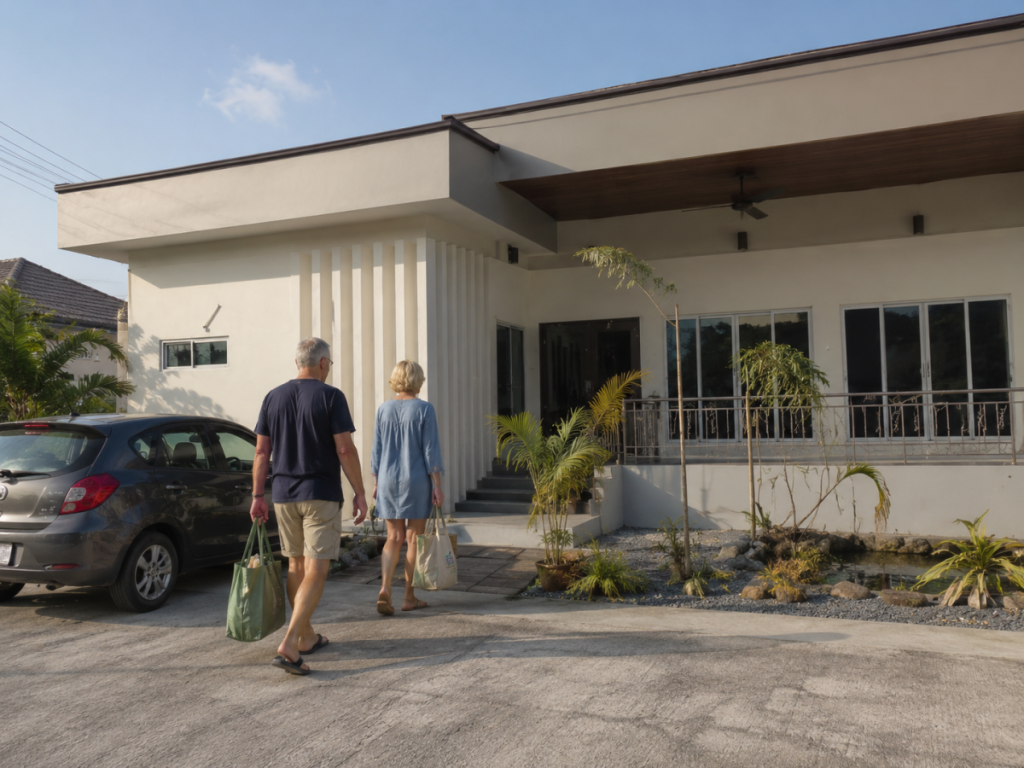
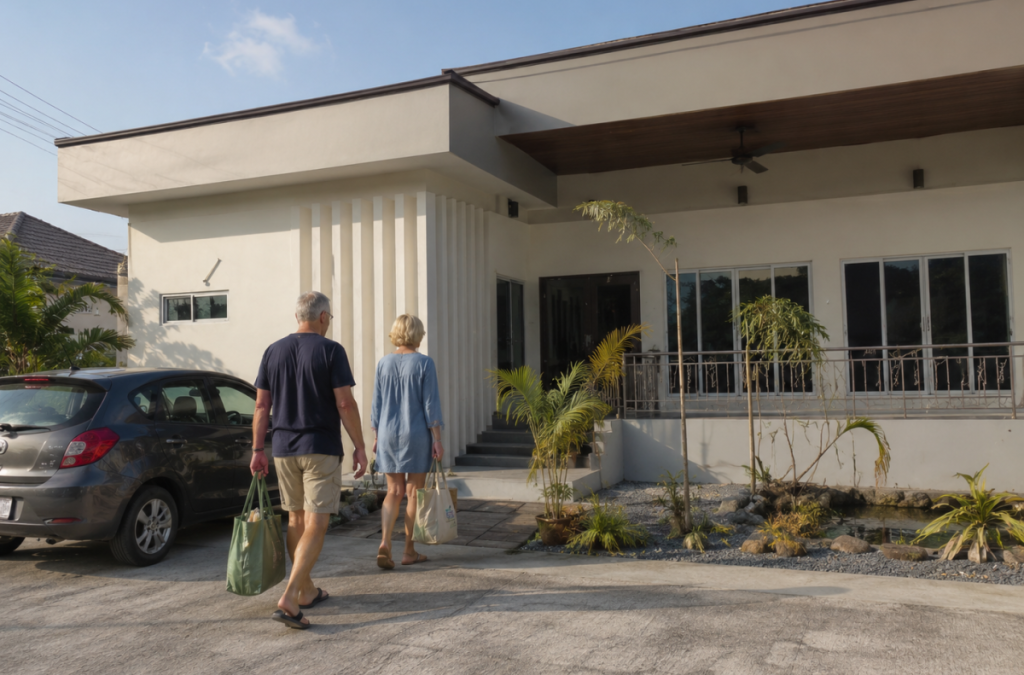
Eine Wohnbasis im Hinterland sollte nicht nur für den Ausflug, sondern auch für die Rückkehr und die ruhigen Stunden zu Hause funktionieren.
Viele Menschen beginnen die Suche nach einem Ruhestandshaus nahe Hua Hin mit der Küste. Das ist nachvollziehbar. Ein Spaziergang am Meer, ein Restaurantbesuch oder ein Nachmittag in der Stadt kann schnell das Gefühl vermitteln, dass die Region passt.
Für die Wohnentscheidung reicht dieses Gefühl jedoch nicht aus. Etwas landeinwärts zu wohnen kann für manche Ruheständler sehr gut funktionieren, während andere die Küste möglichst nah brauchen. Entscheidend ist, ob sich die Adresse, zu der Sie jeden Tag zurückkehren, auch an einem gewöhnlichen Dienstag richtig anfühlt.
Eine Wohnbasis ist etwas anderes als ein Ausflug
Die Tourism Authority of Thailand beschreibt Hua Hin mit Stränden, Restaurants, Nachtmarkt, Golf und weiteren Freizeitangeboten. Für Cha-Am steht stärker ein ruhigerer Küstencharakter nördlich von Hua Hin im Vordergrund.
Solche Beschreibungen helfen bei der Orientierung, beantworten aber nicht die Wohnfrage. Sie können Hua Hin regelmäßig für Restaurants oder Erledigungen nutzen und trotzdem gern in einer ruhigeren Umgebung wohnen. Ebenso kann es für Sie wichtig sein, die Küste ohne zusätzliche Planung direkt vor der Tür zu haben.
Trennen Sie deshalb zwei Fragen: Wo verbringen Sie gern einen besonderen Nachmittag? Und wo möchten Sie morgens aufwachen, einkaufen fahren und am Abend wieder ankommen? Diese Antworten müssen nicht dieselbe Adresse ergeben.
Prüfen Sie die Rückfahrt, nicht nur den Hinweg
Bei einer Besichtigung wird häufig nur der Hinweg getestet. Sie fahren vom Haus zu einem Strandabschnitt, Markt oder Restaurant und prüfen, ob die Strecke grundsätzlich machbar ist. Für den Alltag ist der Rückweg mindestens genauso wichtig.
Fahren Sie nach einer gewöhnlichen Besorgung wieder zum Haus zurück. Achten Sie darauf, wie selbstverständlich sich die Strecke anfühlt, wo Sie parken, wie Sie Einkäufe ins Haus tragen und ob Sie dieselbe Fahrt nach einem Termin oder einem Abendessen noch angenehm fänden.
Eine feste Zahl von Minuten ist dafür weniger hilfreich als Ihr eigener Eindruck zu einer realistischen Tageszeit. Verkehr, Route und persönliche Fahrgewohnheiten können sich unterscheiden. Entscheidend ist, ob eine regelmäßig notwendige Fahrt für Sie zur Routine werden kann.
Bleiben Sie am Haus, wenn nichts geplant ist
Eine Besichtigung ist schnell mit Programmpunkten gefüllt. Gerade bei einer Wohnlage etwas landeinwärts lohnt es sich, einen Teil des Besuchs bewusst nicht zu verplanen.
Sitzen Sie eine Weile auf der Terrasse. Gehen Sie vom Auto zur Haustür. Prüfen Sie Schatten, Geräusche, die direkte Straße und die Räume, die Sie an einem ruhigen Tag tatsächlich nutzen würden. Beobachten Sie nicht nur, was auf Fotos gut aussieht, sondern wie das Haus einen Nachmittag trägt, an dem Sie nirgendwohin fahren möchten.
Wenn Sie einen Standort mehrmals besuchen können, wählen Sie unterschiedliche Tageszeiten. Damit testen Sie Ihren persönlichen Komfort. Aus einem einzelnen Besuch sollten Sie jedoch keine allgemeinen Aussagen zu Klima, Luftqualität oder gesundheitlichen Vorteilen ableiten.
Entscheiden Sie, welche Wege regelmäßig sein müssen
Eine ruhigere Wohnbasis funktioniert besonders dann gut, wenn Sie wissen, welche Fahrten wirklich oft vorkommen. Schreiben Sie deshalb nicht alle interessanten Orte der Region auf, sondern nur die Wege, die zu Ihrer eigenen Woche gehören.
Dazu können Einkauf, ein regelmäßiger Termin, ein Restaurant, Sport oder ein bestimmter Küstenabschnitt gehören. Manche Ziele müssen vielleicht mehrmals pro Woche erreichbar sein. Andere dürfen ein bewusster Ausflug bleiben.
Wenn eine Aktivität nur attraktiv klingt, aber kaum zu Ihrem tatsächlichen Leben gehört, sollte sie Ihre Wohnentscheidung nicht dominieren. Umgekehrt kann eine scheinbar unspektakuläre Strecke zum Supermarkt wichtiger sein als eine schöne Aussicht, wenn Sie sie ständig fahren.
Lassen Sie das Haus zu den Tagen zu Hause passen
Je ruhiger die Wohnlage, desto wichtiger wird das Haus selbst. Es sollte nicht nur der Ort sein, von dem Sie zu Ausflügen starten, sondern auch ein angenehmer Platz für Tage ohne besonderes Programm.
Die aktuelle Seite mit den Wohnoptionen von Leo Resort zeigt mehrere Hausformen. Nutzen Sie diese Übersicht für Fragen zur Nutzung: Wie viel Wohnfläche brauchen Sie wirklich? Wie oft bleiben Gäste über Nacht? Möchten Sie einen privaten Garten oder Pool regelmäßig nutzen, oder wäre weniger Pflege für Ihren Alltag angenehmer? Wie wichtig ist Wohnen auf einer Ebene?
Die öffentliche Seite enthält veränderliche Preis-, Finanzierungs-, Ausstattungs- und Serviceangaben und derzeit auch widersprüchliche Angaben zu einzelnen laufenden Kosten. Lassen Sie deshalb für das konkrete Haus aktuelle Ausstattung, Verfügbarkeit, Kosten, eingeschlossene Leistungen und Verantwortlichkeiten schriftlich bestätigen.
Vergleichen Sie nach der Besichtigung die Rückkehr, nicht nur die Fotos
Nach mehreren Besichtigungen bleiben oft die schönsten Bilder im Gedächtnis. Für eine Wohnbasis sind andere Notizen hilfreicher: Wie fühlte sich die Rückfahrt an? War das Ankommen unkompliziert? Würden Sie dort gern einen ganzen ruhigen Tag verbringen? Welche Wege würden Sie regelmäßig fahren müssen?
Vergleichen Sie diese Punkte bei jedem Haus mit denselben Maßstäben. So erkennen Sie leichter, ob Sie eine ruhigere Lage wirklich bevorzugen oder ob Ihnen die Nähe zu einem lebhafteren Zentrum wichtiger ist.
Für den breiteren Überblick zur Region lesen Sie den German Medium Leitfaden Warum Hua Hin und Cha-Am für den Ruhestand? Ein praktischer Leitfaden. Eine praktische Methode für die Hausbesichtigung bietet der LinkedIn Artikel Bevor Sie ein Ruhestandshaus nahe Hua Hin wählen: Prüfen Sie den Alltag. Für die Planung Ihrer zukünftigen Woche lesen Sie außerdem Planen Sie zuerst Ihre Woche, dann Ihr Zuhause.
Für eine Besichtigung oder aktuelle schriftliche Informationen zu einem bestimmten Haus können Sie die Kontaktseite von Leo Resort verwenden.
Dieser Beitrag dient der allgemeinen Information zur Ruhestands- und Wohnplanung. Er ist keine Rechts-, Steuer-, Finanz-, Einwanderungs-, medizinische, Transport- oder Vertragsberatung. Kosten, Leistungen, Verfügbarkeit, Routen und Kaufbedingungen können sich ändern. Bestätigen Sie wichtige Angaben aktuell und schriftlich und holen Sie bei Bedarf unabhängigen fachlichen Rat ein.

by SompitMekmok | Aug 14, 2026 | อสังหาริมทรัพย์และที่อยู่อาศัย (Real Estate & Home Decor)
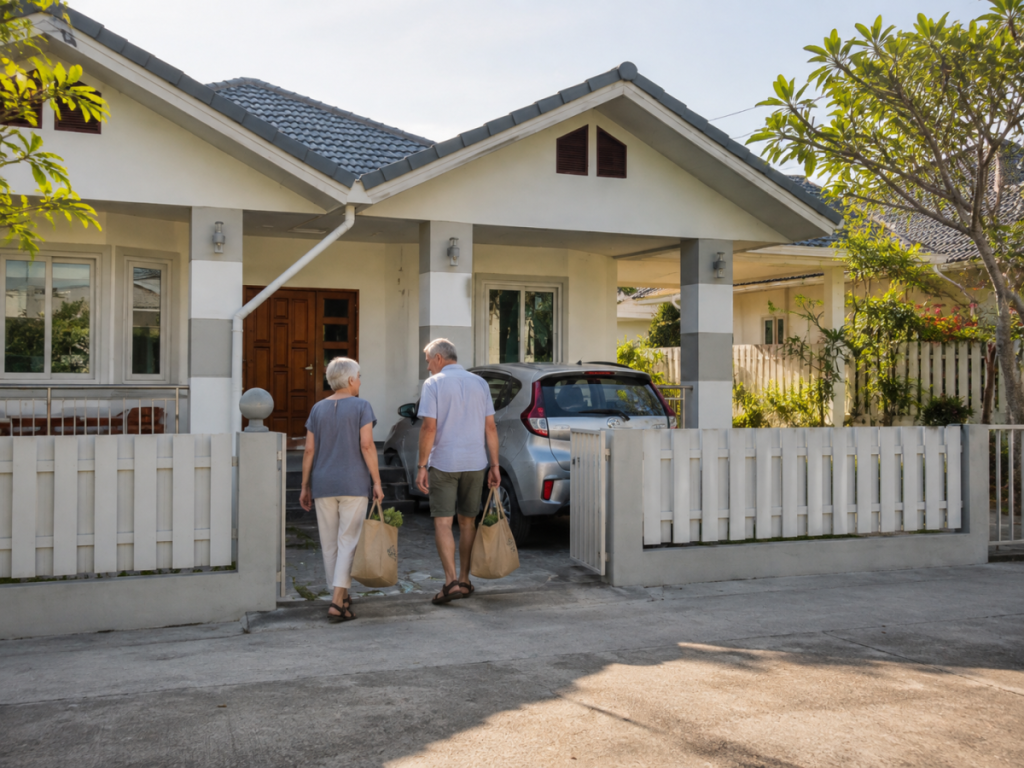
Een woonbasis landinwaarts moet werken voor de terugrit en de uren die u thuis doorbrengt.
Veel zoektochten naar een pensioenwoning nabij Hua Hin beginnen bij de kust. Dat is logisch. Een strandwandeling, een maaltijd buiten de deur of een avond in de stad kan een regio aantrekkelijk maken. Toch bepaalt zo’n dag niet vanzelf waar u wilt wonen.
Iets landinwaarts wonen kan goed passen bij sommige gepensioneerden. Anderen willen juist dichter bij de kust leven. De vraag is of het adres waar u elke dag wakker wordt en naar terugkeert ook bij u past.
Een woonbasis is iets anders dan een uitje
De Tourism Authority of Thailand noemt voor Hua Hin stranden, restaurants, een avondmarkt en bezienswaardigheden landinwaarts. Dezelfde organisatie beschrijft Cha-Am als een rustigere kustplaats ten noorden van Hua Hin. Beide kunnen onderdeel zijn van uw week zonder dat u er elke nacht hoeft te slapen.
Dat onderscheid helpt wanneer een woning niet aan het strand ligt. Misschien geniet u juist meer van de kust als u er bewust heen gaat en daarna terugkeert naar een omgeving die er los van staat. Misschien merkt u dat lopen naar zee voor u zwaar genoeg weegt om uw keuze te bepalen. Geen van beide antwoorden is in het algemeen beter. Het hangt af van uw leven nadat het nieuwe eraf is.
Neem de terugrit serieus
Veel kopers testen een route maar in één richting. Ze vertrekken van de woning, gaan naar een restaurant, markt of strand en vinden dat de dag goed verloopt. De terugrit vertelt de andere helft van het verhaal. Probeer die na een gewone boodschap en let op hoe het voelt wanneer u weer bij het huis aankomt.
U hebt geen vaste reistijd nodig om die test nuttig te maken. Neem dezelfde route op een tijdstip waarop u hem echt zou gebruiken. Denk aan de weg, parkeren, boodschappen dragen en de vraag of u dit ook na een afspraak of avond uit prettig zou vinden. Een kaart helpt bij de planning, maar laat niet zien hoe de routine voor u voelt.
Blijf even bij de woning wanneer er niets hoeft
Een locatiebezoek raakt snel vol. Er zijn huizen te zien, mensen te spreken en plekken te vergelijken. Reserveer bij elke woning ook een rustig moment. Zit op het terras. Loop van de auto naar de deur. Kijk naar schaduw, buitenruimte, activiteit op de weg en de kamers die u op een gewone dag zou gebruiken.
Leo Resort situeert zijn woonomgeving in het gebied Sam Phraya en Silpakorn, tussen Hua Hin en Cha-Am. Bezoek een eventuele woonbasis landinwaarts daarom op meer dan één moment van de dag. Dat is geen test van een vaste klimaatbelofte, maar een manier om te ervaren wat bij u past.
Kies voor de dagen thuis
Bij een adres landinwaarts draagt de woning een groter deel van uw week. Het huis moet ook prettig werken wanneer u niet naar de kust of de stad gaat. Denk na over hoe u met boodschappen binnenkomt, waar u buiten zit, hoeveel bergruimte u nodig hebt, hoeveel privacy u wilt en hoe de kamers werken wanneer er bezoek blijft slapen.
De pagina met woningopties van Leo Resort toont verschillende woningvormen. Gebruik de pagina om vragen te formuleren en bekijk daarna de specifieke woning. Vraag welke buitenruimte privé is, welke verantwoordelijkheden mogelijk bij de woning horen en wat in de actuele schriftelijke afspraak staat.
Geef elke regelmatige rit een reden
Landinwaarts wonen vraagt om een afweging. De kust, de stad en andere plekken die u graag bezoekt kunnen meer planning vragen dan vanaf een centraal adres. Dat kan prima zijn wanneer zulke ritten af en toe voorkomen en u het grootste deel van uw tijd graag thuis doorbrengt.
Schrijf op welke ritten u vermoedelijk geregeld maakt. Gebruik uw eigen woorden en maak geen lijst rond activiteiten die alleen aantrekkelijk klinken in een brochure. Die oefening kan laten zien dat een rustige woonbasis bij u past. Hij kan ook het tegenovergestelde laten zien. Beide uitkomsten zijn nuttig voordat u een woning kiest.
Vergelijk na het bezoek
Vergelijk niet alleen woningfoto’s of het uitzicht vanaf een restaurant. Lees uw aantekeningen terug over de momenten waarop u bij elke woning aankwam. Welke plek voelde gemakkelijk om naar terug te keren? Welke woning gaf u een omgeving waarin u op een gewone dag tevreden zou zijn?
Lees voor de bredere locatiekeuze Waarom met pensioen in Hua Hin en Cha-Am? Een praktische gids voor internationale gepensioneerden. Het LinkedIn-artikel Voordat u een pensioenwoning nabij Hua Hin kiest: test het dagelijks leven geeft een aparte methode voor een woningbezoek. Lees voor het plannen van uw toekomstige routine ook de nieuwsbrief Kies eerst uw week, dan uw woning.
Voor een bezichtiging of actuele schriftelijke informatie over een specifieke woning kunt u de contactpagina van Leo Resort gebruiken.
Dit artikel is algemene informatie over pensioen en woningkeuze. Het is geen juridisch, fiscaal, financieel, immigratie-, medisch, vervoer- of contractadvies. Kosten, diensten, toegang, beschikbaarheid, routes en aankoopvoorwaarden kunnen veranderen. Bevestig actuele details bij de betrokken partij en vraag onafhankelijk advies wanneer dat voor uw situatie nodig is.
by SompitMekmok | Aug 10, 2026 | อสังหาริมทรัพย์และที่อยู่อาศัย (Real Estate & Home Decor)
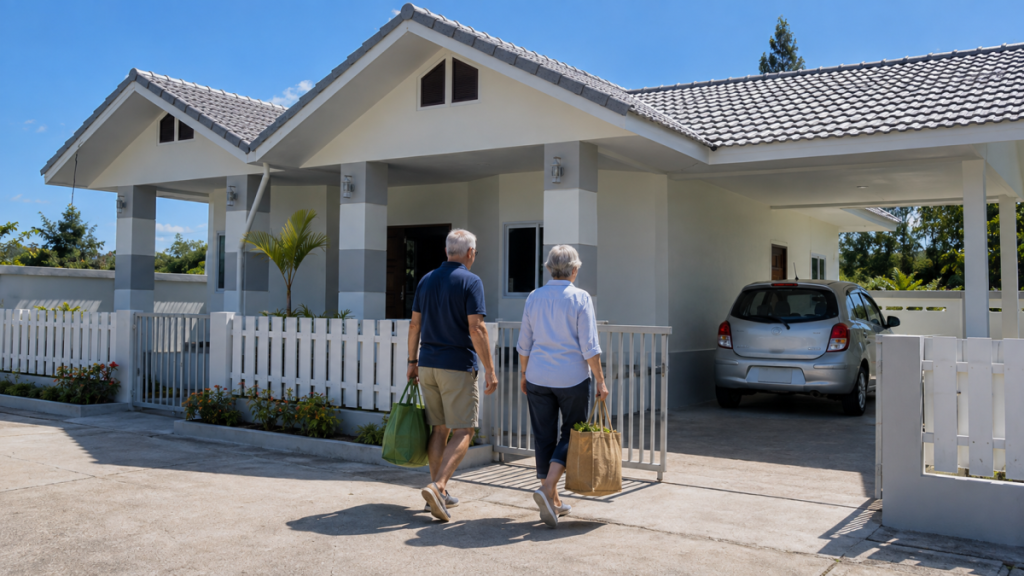
An inland home base should work for the return journey and the hours spent at home.
Many retirement-home searches near Hua Hin begin with the coast. It is easy to understand why. A beach walk, a seafood lunch, or an evening in town can make a region feel promising. Those experiences matter, but they do not settle where you should live.
Living slightly inland can suit some retirees very well, while others will want the coast closer. The question is whether the address where you wake up and return to each day is the one that suits you.
A home base is different from an outing
The Tourism Authority of Thailand’s Hua Hin guide lists beaches, restaurants, a night market, and inland activities. Its Cha-Am guide describes a quieter coastal setting north of Hua Hin. Both can be part of a retirement routine without being the place where you sleep every night.
That distinction is useful when a property sits away from the beachfront. You may enjoy the coast more when it is a deliberate outing, then prefer to come home to a setting that feels separate from it. Or you may decide that being able to walk straight to the sea matters enough to shape your choice. Neither answer is more sensible in general. It depends on the way you use a place after the novelty wears off.
Take the return journey seriously
Buyers often test a route in one direction. They leave the property, visit a restaurant, a market, or the beach, and feel that the day went well. The return journey tells the other half of the story. Try it after a normal errand and notice how you feel as you arrive back at the house.
You do not need a fixed number of minutes to make this test useful. Drive or arrange the same route at a time you would genuinely use it. Think about the road, parking, carrying shopping, and whether you would be comfortable doing it again after an appointment or evening out. A map helps with planning, but it cannot show how the routine feels to you.
Spend time at the property when there is nothing to do
A location visit can become busy very quickly. There are homes to see, people to meet, and places to compare. Keep a little time aside to be still at each property. Sit on the terrace. Walk from the car to the door. Look at the shade, the outside space, the level of road activity, and the rooms you would use on a quiet day.
Leo Resort presents its Sam Phraya setting through a microclimate guide. Use that as a prompt to inspect the setting at more than one time of day. Do not treat any general description as a promise about temperature, humidity, air quality, or the cost of cooling a particular home. Your own visit is the relevant test.
Choose for the days spent at home
An inland address asks the home to carry its share of the routine. The house needs to work when you are not heading to the beach or town. Consider how you enter with shopping, where you sit outside, whether there is enough storage, how much private outdoor space you want, and how the rooms would work when visitors stay.
The current Leo Resort home-options page shows different house formats. Use it to start a conversation about layout and the exact plot, then inspect the home that is actually available. Check which outdoor areas and features are private, which responsibilities may apply, and what is included in the current written arrangement. A suitable home base is often one that makes ordinary arrival and departure uncomplicated.
Keep a reason for every regular trip
Living inland does involve a tradeoff. The coast, town, and other places you enjoy may take more planning than they would from a central address. That tradeoff can be easy to accept when those trips are occasional and the home itself is where you prefer to spend most of your time.
Write down the journeys you expect to make regularly. Do this in your own words, without building a list around activities that sound attractive in a brochure. The exercise may show that a quieter home base fits you. It may show the opposite. Either result is useful before you commit to a property.
Compare places after the visit
Do not compare only the house photographs or the view from a restaurant. Compare the notes you made when you came back to each property. Which place felt easy to return to? Which one left you thinking about the next journey? Which home gave you a setting you would be content to use on a completely ordinary day?
For the broader location discussion, read Why Retire in Hua Hin and Cha-Am? A Practical Guide for International Retirees. The published LinkedIn article, Before You Choose a Retirement Home Near Hua Hin: Test the Everyday Fit, covers a separate five-question method for a home visit. For a quieter way to think through a future routine, read the Substack newsletter Choose Your Week Before You Choose Your Home.
To arrange a visit or request current written details for a specific home, use the Leo Resort contact page.
This article is general retirement and buyer education, not legal, tax, financial, immigration, medical, transport, or contractual advice. Property availability, costs, services, routes, and purchase terms can change. Confirm current details directly with the relevant providers and seek independent advice where appropriate.

by SompitMekmok | Jul 27, 2026 | อสังหาริมทรัพย์และที่อยู่อาศัย (Real Estate & Home Decor)
Zes duidelijke afspraken maken het dagelijkse beheer na de sleuteloverdracht overzichtelijker.
De sleuteloverdracht van een pensioenwoning nabij Hua Hin voelt als een eindpunt. In de praktijk begint dan het dagelijkse beheer. Een onderhoudsvraag, terugkerende kosten of een reis buiten Thailand laat snel zien of de afspraken rond de woning duidelijk genoeg zijn.
Maak daarom zes praktische afspraken voor de specifieke woning. Het doel is niet meer administratie, maar minder twijfel wanneer de woning aandacht nodig heeft.
1. Kies één duidelijke contactroute
Leg vast wie na de overdracht uw eerste bericht ontvangt. Dat kan een projectkantoor, receptie, contactpersoon of externe partij zijn, afhankelijk van de afspraak voor uw woning. Noteer ook een alternatief contact en het beste kanaal voor een gewone onderhoudsvraag.
Vraag welke informatie bij een melding helpt. Een korte omschrijving, foto, woningreferentie en duidelijke toegangsafspraak kunnen misverstanden voorkomen. Maak daarnaast onderscheid tussen een normale onderhoudsvraag en een urgente veiligheidsmelding.
2. Verdeel de verantwoordelijkheden
De Leo Resort-homepage beschrijft beheerd wonen in brede zin. Club House Options geeft afzonderlijke informatie over faciliteiten, hulp via de receptie, uitgesloten onderdelen en werkzaamheden die apart kunnen worden berekend.
Gebruik deze pagina’s als basis voor gerichte vragen. Laat voor uw woning schriftelijk bevestigen wie verantwoordelijk is voor de woning zelf, een privétuin of privézwembad waar van toepassing, gedeelde voorzieningen, nutsvoorzieningen, beveiliging en niet-routinematige reparaties.
3. Spreek goedkeuring voor betaald werk af
Wie een reparatie kan coördineren, betaalt die reparatie niet automatisch. Vraag vóór niet-routinematig werk of eerst een inspectie of offerte nodig is, wie toestemming geeft, hoe toegang wordt geregeld en wanneer betaling plaatsvindt.
Als iemand namens u mag beslissen, leg dan ook een grens vast. Noteer of u eerst foto’s wilt ontvangen, welk bedrag zonder extra overleg mag worden goedgekeurd en hoe de afronding wordt bevestigd. Zo blijft hulp praktisch zonder dat de financiële verantwoordelijkheid onduidelijk wordt.
4. Houd een overzicht van doorlopende kosten bij
Na de aankoop loopt het woonbudget door. Denk aan nutsvoorzieningen, verzekering, regulier onderhoud, reparaties, eventuele tuin- of zwembadzorg en optionele ondersteuning. Welke posten gelden, hangt af van de woning en de actuele afspraken.
Vraag daarom wat iedere betaling dekt, wat uitgesloten is, wanneer u betaalt en of het bedrag naar het project of rechtstreeks naar een externe dienstverlener gaat. Gebruik een bedrag uit een oudere pagina of de afspraak van een andere eigenaar niet als vaste regel voor uw woning.
5. Maak vóór iedere reis aparte afspraken
Wanneer u tijdelijk buiten Thailand bent, blijven toegang en goedkeuring belangrijk. Bepaal wie een sleutel bewaart, wie u mag benaderen en welke taken tijdens uw afwezigheid werkelijk zijn afgesproken.
Wilt u een woningcontrole, tuin- of zwembadzorg, ontvangst van een levering of toegang voor een vakman? Bevestig iedere taak afzonderlijk. Ga er niet van uit dat deze werkzaamheden automatisch plaatsvinden omdat de woning deel uitmaakt van een beheerde woonomgeving.
6. Bewaar alles in één woningdossier
Een compact dossier voorkomt dat afspraken verspreid raken over e-mails, berichten en losse papieren. Bewaar daarin de overdrachtsnotities, sleutels en toegang, handleidingen en garanties waar van toepassing, contactroutes, de verdeling van verantwoordelijkheden, actuele kosten en eerdere onderhoudsmeldingen.
Werk het dossier bij wanneer een contactpersoon, tarief of afspraak verandert. Zo blijft de informatie bruikbaar wanneer u later reist, iemand namens u contact opneemt of een onderhoudsvraag opnieuw voorkomt.
Maak het huis praktisch beheersbaar
Een woning hoeft niet ingewikkeld te worden zodra u de sleutels ontvangt. De rust ontstaat vooral wanneer u weet wie u benadert, welke verantwoordelijkheid bij wie ligt en welke stap nodig is voordat werk of kosten ontstaan.
Lees voor de volledige uitleg de Dutch Medium-gids Uw pensioenwoning nabij Hua Hin na de overdracht: onderhoud, service en praktische afspraken.
Voor een rustige eerste-maandroutine kunt u ook de Dutch Substack-nieuwsbrief De eerste maand na de overdracht: rust rond uw woning nabij Hua Hin lezen.
Gebruik de contactpagina van Leo Resort om verantwoordelijkheden, ondersteuning, kosten, toegang en goedkeuringsstappen voor de specifieke woning schriftelijk te laten bevestigen.
Dit artikel is algemene informatie voor eigenaren en geen juridisch, financieel, fiscaal, medisch of contractueel advies. Diensten, kosten, verantwoordelijkheden en beschikbaarheid kunnen per woning en overeenkomst verschillen.

by SompitMekmok | Jul 23, 2026 | อสังหาริมทรัพย์และที่อยู่อาศัย (Real Estate & Home Decor)
A simple after-handover system makes maintenance questions, costs and travel planning easier to manage.
The day you receive the keys to a retirement home near Hua Hin can feel like the final step. In reality, it is the first day of managing the home as part of ordinary life. A loose tap, an air-conditioning service, a utility question, a trip abroad, or a recurring charge can quickly reveal whether the practical arrangement is clear.
Instead of asking only whether the home is “managed,” create six simple systems for the exact property. The aim is not to create more paperwork. It is to make everyday decisions easier when the home needs attention.
1. Keep one clear contact route
Begin with the person or team that should receive your first message after handover. This may be a project office, reception contact, named manager, contractor, or another route agreed for the home. Record the main contact, a backup contact, normal contact hours, and the best channel for a request.
Also ask what information should be included. A photo, house or unit reference, short description, access instruction, and preferred reply method can help the right person understand the issue. Clarify how an urgent safety matter should be reported and how that differs from an ordinary maintenance request. A contact route is useful only when both sides understand how it works.
2. Draw a responsibility map
Broad phrases such as “maintenance-free living” can describe a lifestyle goal, but they do not tell you who handles every task. Create a simple responsibility map with four columns: homeowner, project or reception, shared arrangement, and outside provider.
The Leo Resort homepage presents garden, pool, exterior, and security management as part of its wider formula. The Club House Options page gives a more detailed view of facilities, reception help, exclusions, and outside work that may carry a separate charge. Use both pages as conversation starters, then ask what applies to your specific home now.
Map practical items such as the private garden, private pool, exterior, appliances, utilities, pest control, shared facilities, security, and non-routine repairs. The important result is not that one party handles everything. It is that you know where each responsibility begins.
3. Agree on an approval path for paid work
Knowing who can coordinate a repair is different from knowing who pays for it. Before a non-routine job begins, confirm whether an inspection or quotation is needed, who approves the work, how access is arranged, and when payment is due.
This matters even more when you are outside Thailand. Decide whether anyone may approve work on your behalf, whether there is a spending limit, and how you will receive photos, invoices, or completion notes. Never assume that a friendly offer to help means the work is included or that the project will make an unlimited decision for the homeowner.
4. Build a yearly living-cost calendar
A purchase budget ends at handover; a living budget continues. List the recurring and occasional costs that may apply to your own arrangement: utilities, insurance, community or service charges, garden or pool care where relevant, routine equipment servicing, repairs, transport, and optional support.
Put each item on a simple monthly or yearly calendar and keep a reserve for unexpected work. Ask for current written costs, what each charge covers, what is excluded, how changes are communicated, and which payments go directly to outside providers. Do not use an amount from an older page, brochure, or another homeowner as a permanent rule for your home.
5. Make an away-from-home plan
Many international retirees travel, return to their home country, or spend part of the year elsewhere. Before leaving, decide who can enter the property, who holds a key, who can contact you, and how you will approve work from abroad.
If you want garden or pool care, home checks, delivery access, or help responding to an issue while away, confirm the arrangement rather than assuming it happens automatically. Name a trusted contact if appropriate and record the limit of that person’s authority. A simple away plan protects both the homeowner and the people asked to help.
6. Maintain one after-handover file
Keep one digital folder and one easy-to-find paper file containing:
- handover notes, keys, access details, manuals, and warranties where applicable;
- the main and backup contact routes;
- the responsibility map for the home;
- current service scopes, exclusions, charges, and approval steps;
- repair requests, quotations, invoices, and completion records;
- the away-from-home plan and any authorised contact.
Update the file when a contact, charge, or arrangement changes. This is not about expecting problems. It gives you, your family, and anyone helping from another country one reliable place to understand how the home is managed.
A practical next step
A retirement home becomes easier to enjoy when the system around it is understandable. Before or soon after handover, ask for the current contact route, responsibility split, approval process, recurring costs, travel arrangement, and written records for the specific home.
For the detailed buyer-education guide, read the Medium article After Handover: Maintenance, Services and Support at a Hua Hin Retirement Home.
For a quieter story about settling into everyday life, read the Substack newsletter The Keys Are Yours. Now Make the Home Easy to Live In.
Then review the current information on the Leo Resort website and use the contact page to request written clarification about maintenance, available support, current charges, exclusions, and the best point of contact for the home you are considering.